Top-of-the-line Cardiac Technology now available in Frederick County, Reducing Transfers, Costs, and Risks for Patients
- Category: Frederick Health Services, Heart Care
- Posted On:

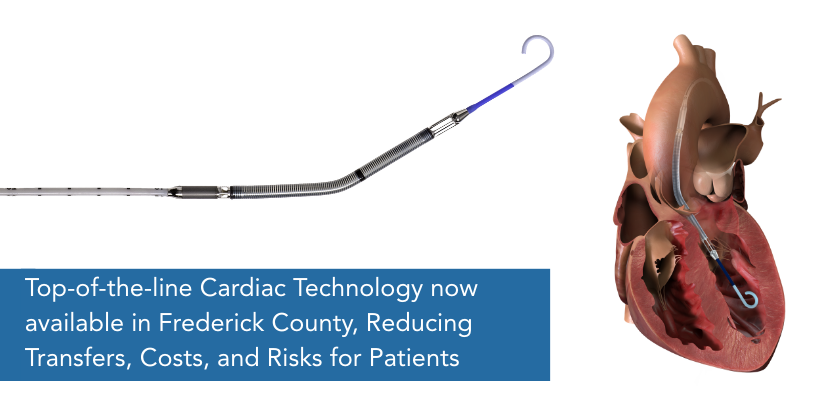
For years, the most advanced cardiac care in Maryland has been concentrated in a small number of large medical centers outside of the Frederick region. Frederick Health is challenging that model with Impella®, the world’s smallest heart pump, to reduce risks, costs, and the need for patients to be transferred to distant specialty hospitals.
According to the American Heart Association, cardiovascular disease is one of the most prevalent and costly, totaling over $300 billion in costs. In the United States, approximately one of every four patients with acute heart failure is readmitted within 90 days of initial admission.
Use of Impella has been associated with reduced average hospital stays and costs for certain patients undergoing high-risk procedures (HR-PCI) or suffering from severe heart failure (cardiogenic shock). Based on historical patient volumes, Frederick Health expects to reduce transfers to other Maryland hospitals by 25% for patients requiring the advanced cardiac support that the heart pump offers.
“Impella has been shown to improve survival in patients who have suffered a severe heart attack and acute heart failure,” said Dr. Chao-Wei Hwang, Medical Director of Frederick Health’s catheterization laboratory and interventional cardiologist at Johns Hopkins. “We can now provide support to the heart sooner, which can help patients avoid longer-term risks and costs associated with transfers and open-heart procedures.”
The New England Journal of Medicine’s clinical trial found that using Impella is associated with a 35.7% relative risk reduction for patients under 77 years of age. They also found that the heart pump helps to reduce dependency on blood pressure drugs, improving patient outcomes.
“Being transferred out of the region for critical care adds emotional, financial, and logistical strain for patients and their families,” said Amy Burrier, Director of Cardiac and Vascular Services at Frederick Health. “We're proud to reduce transfers and costs by offering the same advanced technology as the nation’s top cardiac centers to our community.”
This aligns Frederick Health with the latest national standards in cardiovascular care. In 2025, the American Heart Association (AHA) and American College of Cardiology (ACC) designated Impella® as a Class 2a recommended therapy for patients with severe cardiogenic shock.
References
1. https://fyra.io. (2018). Treating the Growing Population of Patients With High-Risk, Complex Coronary Artery Disease: Protected PCI With Impella® - Cardiac Interventions Today. Cardiac Interventions Today. https://citoday.com/articles/2018-may-june-supplement/treating-the-growing-population-of-patients-with-high-risk-complex-coronary-artery-disease-protected-pci-with-impella
2. Maini, B., Scotti, D. J., & Gregory, D. (2014). Health economics of percutaneous hemodynamic support in the treatment of high-risk cardiac patients: a systematic appraisal of the literature. Expert Review of Pharmacoeconomics & Outcomes Research, 14(3), 403–416. https://doi.org/10.1586/14737167.2014.908714
3. Klein, A., et al. DanGer Shock Investigators (2024). Treating Older Patients in Cardiogenic Shock with a Microaxial Flow Pump: Is it DANGERous?. Journal of the American College of Cardiology, S0735-1097(24)10416-0. Advance online publication. https://doi.org/10.1016/j.jacc.2024.11.003
4. Udesen NLJ, et al. (2024). Microaxial Flow Pump Hemodynamic and Metabolic Effects in Infarct-Related Cardiogenic Shock: A Substudy of the DanGer Shock Randomized Clinical Trial. JAMA Cardiol. doi:10.1001/jamacardio.2024.4197
[1].png)