Bladder cancer patient spurs innovation at Frederick Health
- Category: Patient Stories, Cancer, What Our Patients Say
- Posted On:
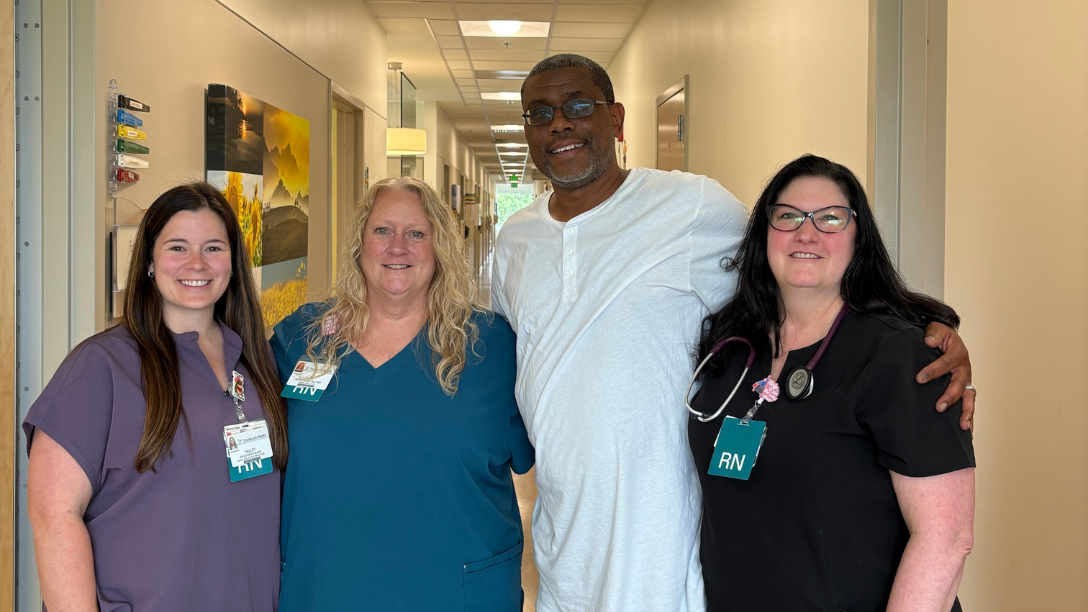
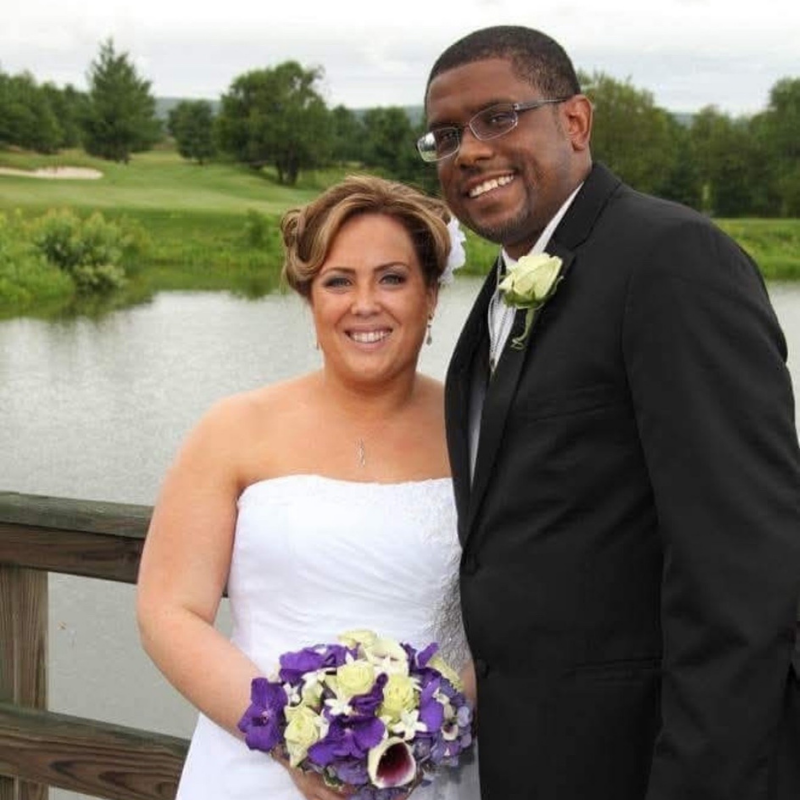
Philip Lyles was 44 years old when he was diagnosed with non-muscle invasive bladder cancer. At the time, his son had just turned one year old. But five years later, he’s not only celebrating being cancer-free, he’s celebrating the people who made it possible.
Philip’s diagnosis
At the time of his diagnosis in 2021, Philip Lyles had been solely focused on growing his family. What should have been a time spent on first steps, first words, and family milestones suddenly became a fight for his future.
"It’s one of the hardest things I’ve ever had to hear,” Lyles said. “You always think it would never happen to you. And then when it happens, you’re like, ‘Why me? Why now?’”
Non-muscle invasive bladder cancer (NMIBC) is cancer found in the tissue that lines the inner surface of the bladder. The cancer shows up more frequently in men more than women, with African American men less likely to survive the disease. It is most often found in individuals aged 77-84, nearly twice Lyles’ age.
When the tumor was discovered, it was too large for it to be fully removed through surgery. As a result, he was referred to Dr. Heather Chalfin, a board-certified urologic oncology surgeon and the Medical Director of Clinical Trials at Frederick Health.
Meeting Dr. Chalfin and the team
Lyles researched Dr. Chalfin, and described her warmth as an affirming factor for him. “Once I’d met Dr. Chalfin and the team of nurses, they made me feel comfortable and treated me like a person, not just a patient. That was all I needed to know.”
Dr. Chalfin kept Lyles well-informed about his treatment and the realities he would face.
"It’s not a small thing for a patient to have to go through,” she said. “He’s a very young man with a young family. For someone like him, it’s important to think about the whole perspective of his care.”
Throughout his treatment, Lyles’ family remained his biggest motivation. Every appointment, every procedure, and every setback came with one goal in mind: to be there for the moments that mattered most.
“There were really rough, really hard days,” Lyles said. “On days when my son wanted me to get up and play with him, it was exhausting. But I couldn’t let that stop me. I had to be there for him and my family.”

Lyles’ optimism didn’t stop there—every time he came in for treatment, he would bring a dozen donuts with him for the nursing team.
“I was the first patient of the day,” Lyles’ said. “If I could do just one small thing to show my appreciation and get their day off to a good start, I’d do it.”
Throughout his treatment, Lyles formed a close bond with his team of nurses and Dr. Chalfin, often celebrating milestones both in his cancer treatment and in fatherhood.
“They became more like a family to me,” Lyles said. “I trusted them in their decisions...if they had told me to jump on one leg for my cancer treatment, I would do it. They clearly knew what they were doing.”
The team remained by his side throughout every step of the way except one—his Blue Light Cystoscopy.
What is Blue Light Cystoscopy?
Blue Light Cystoscopy is a procedure to find and remove bladder cancer. Before the procedure, a special imaging fluid is placed into the bladder. When exposed to a special blue light, fast-growing cancer cells absorb this fluid and glow a bright pink, making them significantly easier to see. It enhances the visibility of certain bladder tumors that may be missed with traditional white light cystoscopy.
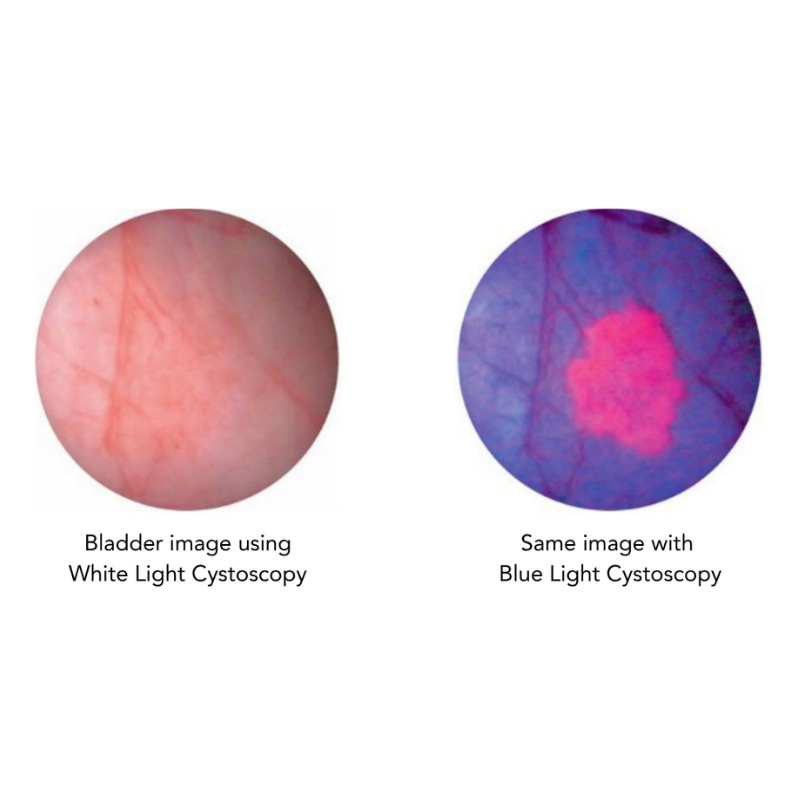
“Blue Light Cystoscopy has been recognized as having better cancer outcomes for patients for over a decade,” said Dr. Chalfin. “It has been shown to decrease cancer recurrence, progression, and have better cancer outcomes for patients.”
At the time, access to Blue Light Cystoscopy had been limited to larger medical centers outside of Frederick County, requiring patients to travel at least an hour away from the county to receive their resection.
“It was a pain having to travel all the way to Baltimore, sat there all day, then drive all the way back,” Lyles said. “We’re a large county...why can’t Frederick County have it too?”
Dr. Chalfin shared in his sentiment, as she had seen the disruption to his life as well as in other patients’ lives. She added that patients having access to advanced care locally was important “so that they can feel at-home and supported and not travel long distances.”
Bringing innovation to Frederick Health
Lyles would consistently ask Dr. Chalfin if there was any way that he could show his appreciation to her and her team for the care that he received. Determined to bring Blue Light Cystoscopy to Frederick Health, Dr. Chalfin spoke with Lyles about sharing his cancer treatment journey and experience.
“I’ll never forget the conversation,” Lyles’ said. “It was an immediate yes. If I can make an impact by sharing my story, I’m all about that.”
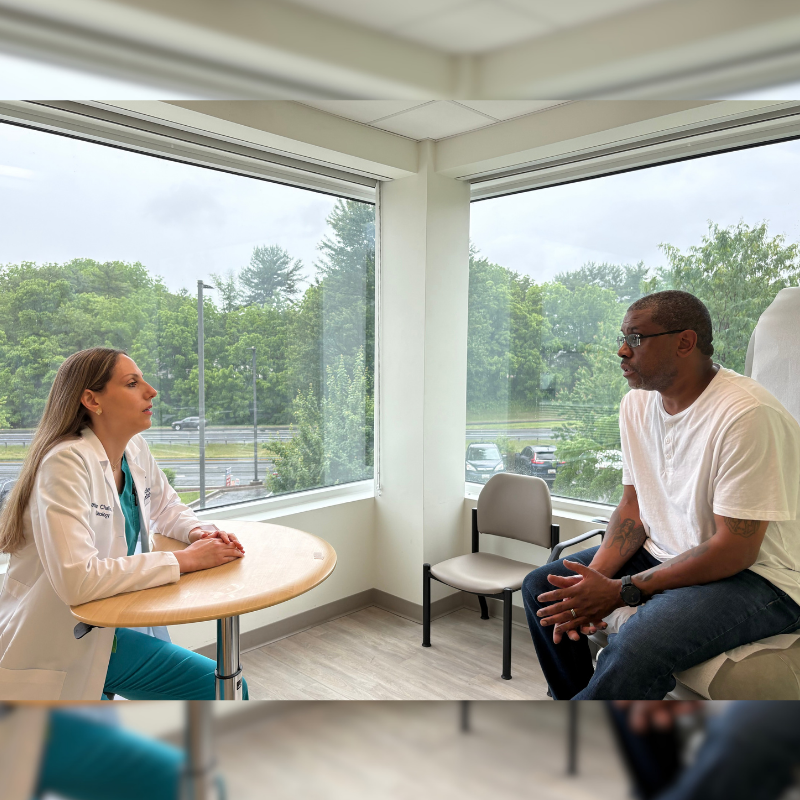
“The knowledge that I had a patient who was willing to be an advocate and speak on his personal experience was really meaningful,” Dr. Chalfin said. “And through his efforts and the efforts of many others, we’re now able to offer this lifesaving technology here at Frederick Health.”
Their combined dedication to bringing advanced care to Frederick County made an immediate impact: Dr. Chalfin performed the first blue light cystoscopy procedure at Frederick Health on August 14, 2025.
Five years later
In February of 2026, Lyles completed his last round of maintenance treatment for his non-muscle invasive bladder cancer.
“It put a period at the end of my sentence,” Lyles said. “I am so thankful for everyone on my team at Frederick Health. They were with me through it all. If I had to do it all again, I wouldn’t change a thing.”
.png)
“I was so proud to see Mr. Lyles complete his maintenance treatment,” said Dr. Chalfin. I’m wishing him the best in all his future endeavors, and I’m thankful that we’ve been able to bring even more treatments for bladder cancer to Frederick Health.”

Today, his son is no longer a toddler. The years that once felt uncertain are now filled with memories made together, and his story has helped ensure others in Frederick County have that same chance.
With an average of 9,471 new cases of bladder cancer in Maryland a year, Frederick Health is constantly working to offer patients the latest in cancer care. Frederick Health’s Urology and Oncology teams have recently expanded capabilities in bladder cancer diagnosis and treatment, offering several advanced therapeutic options.
Lyles’ cancer journey is just one of the countless impactful stories of patients here at Frederick Health. If you or a loved one has had a positive experience with Frederick Health and is ready to share your story, please submit a patient testimonial.
