Give Pain the “Slip” This Winter: Slips & Falls Prevention
- Category: Healthy Living, Frederick Health Services
- Posted On:
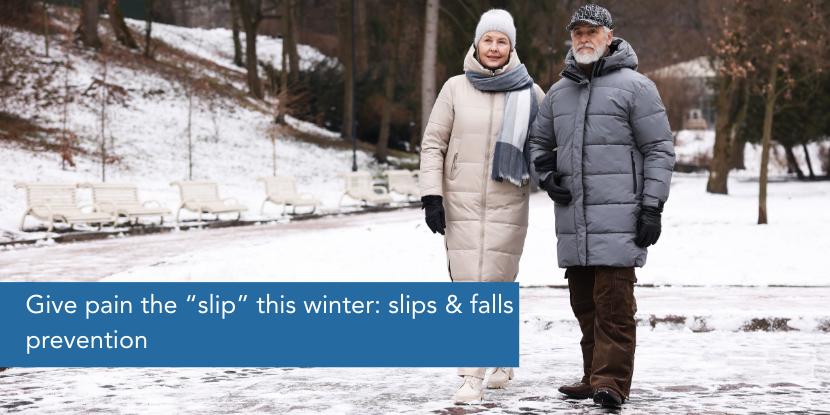
Approximately one million people are injured from slips and falls on ice and snow each year, according to the Centers for Disease Control and Prevention (CDC). Snow can hide curbs, holes, and especially "black ice," which is almost invisible.
This winter season, be extra vigilant of these hidden dangers and protect yourself by knowing what to do if you or a loved one find yourselves in a shaky situation.
Understanding the dangers of a fall
For a child on the playground, it is far easier to immediately get back up after a bad fall. But as we age, falling can cause injuries and complications far more serious than a scrape on the knee.
“A single fall can affect someone’s mobility for months and even years, which is why prevention matters as much as treatment,” said Dr. David Kowalk, an Orthopedic & Sports Medicine physician with Frederick Health and seeing patients at our Emmitsburg location.
With more than 25 years of experience treating knee and shoulder conditions, Dr. Kowalk focuses on personalized evaluation and non-surgical treatment of orthopedic injuries.
“Damage can range from a sprained ankle to a herniated disc. It’s important to know the risks, how to prevent them, and immediately seek treatment for any pain.”
According to the CDC, 1 in 4 Americans ages 65 and older have at least one significant fall each year. Falls are also the leading cause of fatal and nonfatal injuries in older adults.
Fortunately, there are many things you can do to help prevent the worst this winter season.
Wear proper footwear
Shoes with traction, cleats, and non-slip soles will help prevent any unintentional slip-n-slide events. Whether you are wearing these shoes or not, you should walk very slowly and flat-footed to reduce the risk of a fall. If it’s snowing, ditch your heels for a sturdy and warm boot.
Monitor the weather, especially freezing temperatures
The weather can change at a moment’s notice. Stay vigilant and prepare yourself with the proper equipment just in case you’re caught in bad weather. That could mean keeping an extra pair of shoes with traction in the car or covering your walkway in melting salts on a night when snow might be expected.
Step down, not out
When exiting a car, make sure you keep your body low so that your weight is focused downward, not forward when emerging. A low center of gravity will provide you with better balance. In addition, if you do fall, it is far better to do so closer to the ground.
Walk on marked paths and use handrails
Walk and drive only on clear paths. When walking, especially on icy porch steps, use handrails to stabilize yourself. Avoid any typical shortcuts, as main roads and main walking paths are cleared and salted first since they are used by more people. Avoid any uneven paths as well, as these can become even more unpredictable this time of year. Taking less time to get somewhere is nothing compared to your safety.
Only carry what you can
Often times, falls occur while doing everyday activities. Making another trip to empty the groceries in the trunk may be more time consuming, but it’s far safer than trying to carry them all at once. In any scenario, be sure to be as lightweight as possible. Don’t load everything into a heavy backpack that might offset your balance.
What to do if you’ve fallen
Sometimes, no matter how careful you are, you can’t prevent a fall. In those moments, remember to stay calm. Do not try to get back up immediately.
Assess your injuries—check for sharp pain or swelling and carefully test your limbs (without standing back up) for any pain.
Protecting your head is among the most important things to do if you’ve had a bad fall. If you’ve fallen, tuck your chin to your chest to protect your head from hitting the ground. If you suspect a serious issue, such as a fracture or head injury, stay put and call for help.
Pain management: Frederick Health is here to help
After a fall, it’s important that you seek help immediately to prevent any complications from worsening. Whether you are injured this season or sustained an injury and are feeling prolonged pain, our Orthopedics & Sports Medicine team at Frederick Health Emmitsburg is available to help you get back to health year-round.
Alongside Dr. Kowalk, Dr. Lawrence Enweze serves the Emmitsburg community as a surgeon with Frederick Health Orthopedics & Sports Medicine.
Dr. Enweze is skilled in treating ACL injuries, rotator cuff tears, sprains, and other joint conditions at Frederick Health’s Emmitsburg location. He provides individualized care designed to relieve pain, restore strength, and help you return to daily activities with confidence.
If you’re experiencing joint pain, a recent injury, or trouble moving comfortably, our expert orthopedic team can help you stay active and independent.
Best of all, you won’t need to drive far through the harsh winter weather. We are conveniently located on Old Emmitsburg Road.
At Frederick Health Emmitsburg, we offer:
Physical Therapy
Orthopedics
Certified Dry Needling
Pain Management
Fall Prevention and Balance
Osteoporosis and Bone Health Programs
Pre-Surgical & Post-Surgical Rehab
Surgical Consults
Winter may be unpredictable, but your health doesn’t have to be. For more information on Frederick Health Orthopedics & Sports Medicine visit www.FrederickHealth.org/Ortho or call us at 301-663-9573.